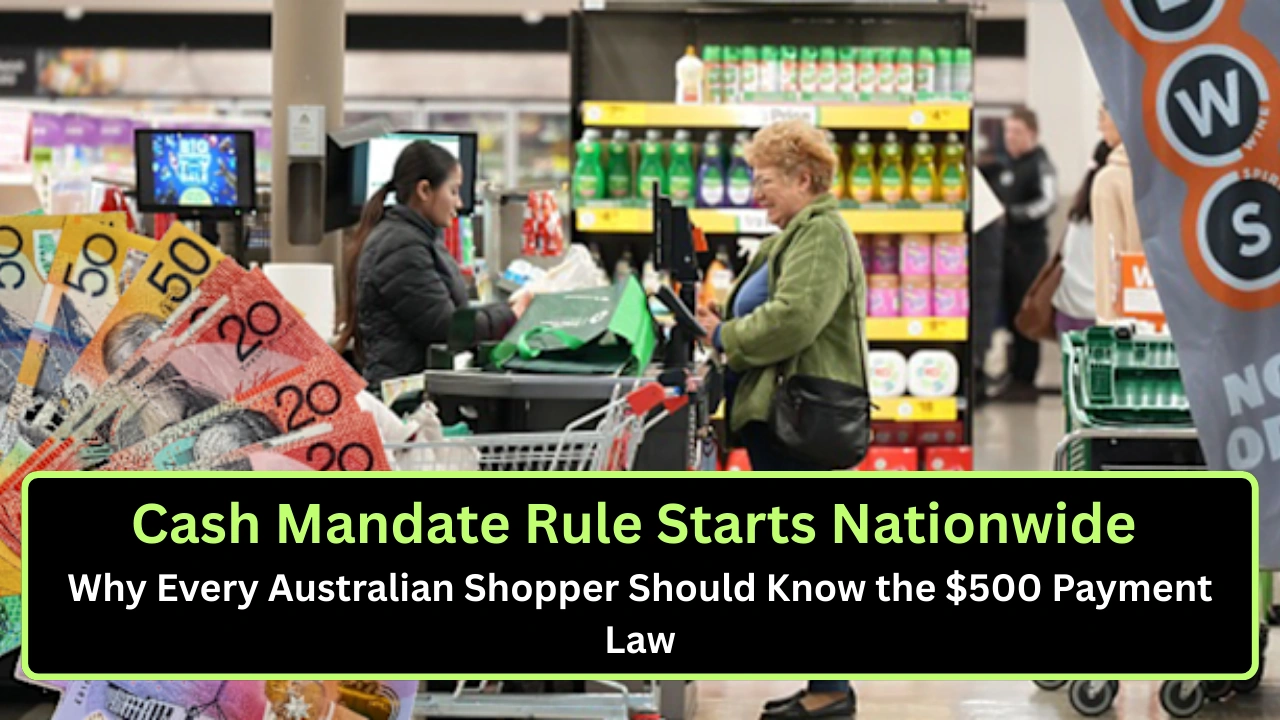
On a busy Saturday morning in Melbourne, a shopper reaches the checkout with groceries and a banknote in hand. For years, many Australians have become used to signs that read “Card Only.” But under a new nationwide payment rule rolling out across Australia, situations like this may begin to change.
A new $500 cash mandate rule is drawing attention across the country. The policy aims to protect Australians’ ability to pay with physical money, even as digital payments dominate daily transactions. For millions of shoppers, the change could affect how businesses accept payments and how consumers use cash.
Here’s what you need to know about the Australia cash payment law and the $500 cash mandate rule.

What’s Changing Under the $500 Cash Mandate
The new rule focuses on protecting access to cash payments for everyday purchases, particularly as many retailers move toward card-only systems.
Key points of the policy include:
- Businesses providing essential goods or services must accept cash payments for transactions up to $500
- The rule applies nationwide across Australia
- The mandate is designed to ensure cash remains a valid payment option
- Retailers may still accept cards and digital payments, but cannot refuse cash within the allowed threshold
- Some exceptions may apply to online businesses or certain automated services
The government says the measure is intended to support financial inclusion, consumer choice, and payment system resilience.

Why the Government Introduced the Rule
Australia is one of the world’s fastest-growing cashless economies. Over the past decade, digital payments have surged while physical cash usage has steadily declined.
Recent financial data suggests:
- Less than 15% of in-store payments are now made with cash
- Many small retailers have adopted card-only policies
- Regional and elderly communities still rely heavily on cash
Officials argue the new rule helps ensure no Australian is excluded from everyday purchases simply because they rely on cash.

A Treasury spokesperson explained the reasoning behind the policy.
“Cash remains legal tender and an important safety net in Australia’s payment system. This rule ensures Australians can continue using it for essential transactions.”
Government Statements on the Cash Payment Policy
Australian officials say the new rule is not meant to slow digital payment growth but to ensure payment choice remains available.

A government representative noted that cash still plays an important role during technology outages, disasters, or banking disruptions.
“Digital payments are convenient, but resilience matters. Maintaining cash acceptance ensures Australians can continue buying essentials even if electronic systems fail.”
The government also highlighted concerns that a fully cashless system could exclude vulnerable groups, including seniors and people in remote communities.
Expert Analysis and Economic Context
Financial analysts say the policy reflects a growing global debate over the future of physical money.
According to payment industry research:
- Nearly 95% of Australians now own a debit or credit card
- Mobile wallets and tap-and-go payments dominate urban areas
- However, about 1.5 million Australians still rely heavily on cash
Economist Daniel Reeves explains the balance policymakers are trying to strike.

“Governments don’t want to block innovation in payments. But they also don’t want to eliminate cash before everyone is ready.”
Experts also note that cash provides privacy and budgeting benefits that digital systems do not always offer.
Cash vs Digital Payments in Australia
| Payment Method | Estimated Share of In-Store Payments | Key Advantage |
|---|---|---|
| Cash | ~15% | Privacy and budgeting control |
| Debit Card | ~45% | Widely accepted and convenient |
| Credit Card | ~25% | Rewards and credit flexibility |
| Mobile Wallet | ~15% | Fast tap-and-go payments |
While digital payments dominate, the new rule aims to keep cash as a guaranteed option for consumers.

What You Should Know
If you live in Australia, here are the practical implications of the new $500 cash rule.
- You can generally pay cash for purchases up to $500
- Businesses providing essential goods or services may be required to accept cash
- Card-only policies may face restrictions depending on the business type
- The rule focuses primarily on in-person transactions
- Digital payments will continue to be widely available
Consumers should still expect that some services — such as online platforms or automated machines — may remain cashless.
Q&A: Australia’s $500 Cash Mandate Rule
1. What is the $500 cash mandate rule in Australia?
It is a nationwide policy aimed at ensuring businesses accept cash payments for transactions up to $500 for certain goods and services.

2. Why was the rule introduced?
The government wants to protect consumer choice and ensure people who rely on cash are not excluded from everyday purchases.
3. Does every business have to accept cash?
Not necessarily. The rule primarily targets essential goods and services, and some businesses may be exempt.
4. Does the law ban card-only stores?
The rule may limit card-only policies for certain types of businesses but does not eliminate digital payments.
5. Does the rule apply to online shopping?
No. Online retailers generally operate through digital payment systems.
6. What is the maximum cash payment allowed under the rule?
The focus of the policy is ensuring cash is accepted for purchases up to $500.
7. Can businesses refuse large cash payments above $500?
Yes, depending on their payment policies and operational considerations.
8. Does the rule affect debit or credit card payments?
No. Digital payments remain widely available and unaffected.
9. Who benefits most from the policy?
Older Australians, rural communities, and people who prefer or rely on cash.
10. Is Australia moving away from cash?
Cash usage is declining, but the government wants to maintain it as a backup payment system.
11. When does the rule take effect nationwide?
Implementation timelines vary as regulations are introduced and businesses adjust policies.
12. Could the payment limit change in the future?
Yes. Governments may review the threshold depending on economic and payment trends.
13. Does the rule apply to public services?
Many public services are expected to continue accepting cash under the policy framework.
14. Are there penalties for businesses that refuse cash?
Specific enforcement rules may depend on the final regulatory structure.
15. Will Australia eventually become cashless?
Experts believe cash will continue to exist alongside digital payments for the foreseeable future.









Leave a Comment