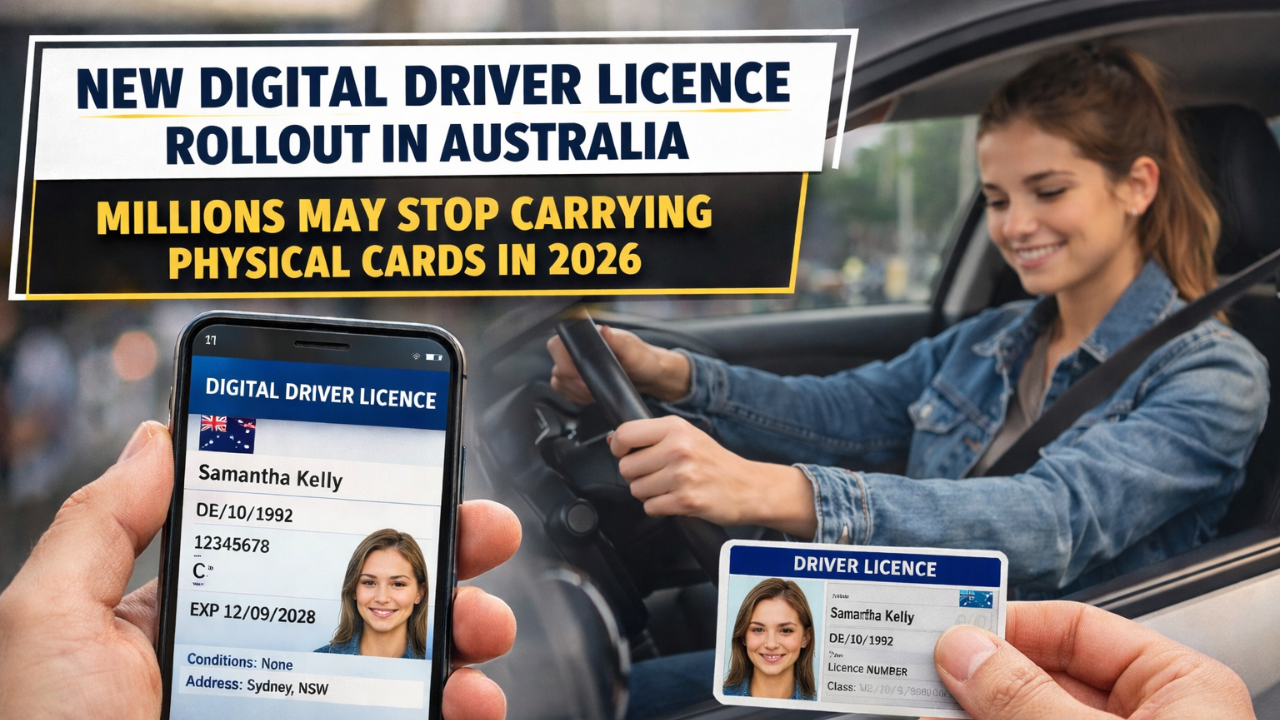
On a quiet suburban street in Brisbane, a police officer stops a driver for a routine check. Instead of searching through a wallet, the driver simply unlocks a phone and opens a government app. Within seconds, the officer scans a secure QR code and confirms the licence is valid.
Scenes like this are expected to become increasingly common across Australia by 2026, as digital driver licences (DDL) continue expanding nationwide. The program, already active in several states, is part of a broader push toward digital identity systems designed to simplify daily life while strengthening identity verification.
For millions of Australian drivers, the change could mean no longer needing to carry a physical plastic licence card. But while the technology promises convenience and improved security, questions remain about how the system works, how safe it is, and what drivers should expect in the coming years.
Here’s what you need to know about the digital driver licence rollout in Australia in 2026.
What’s Changing With Digital Driver Licences in Australia
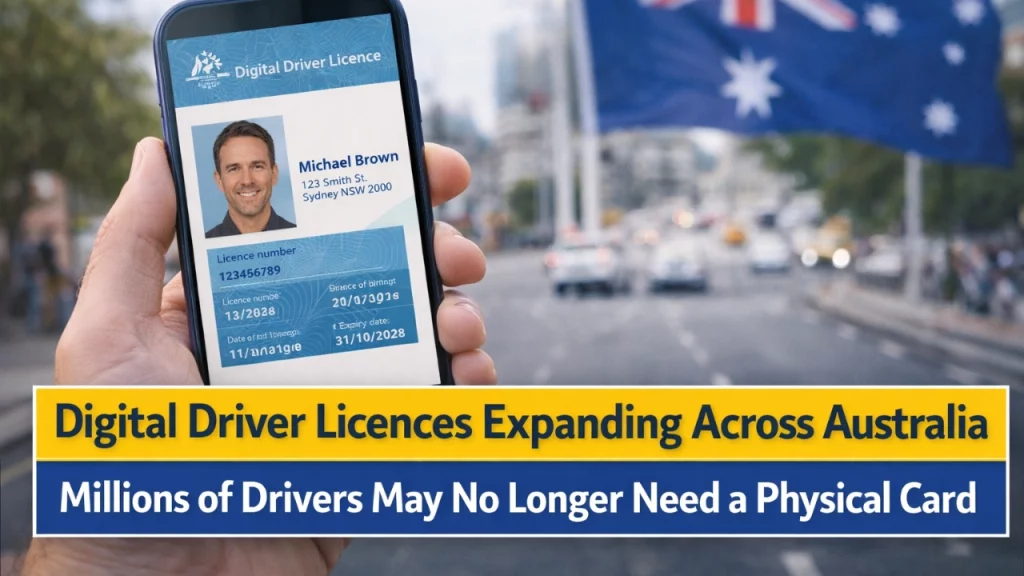
Digital driver licences are smartphone-based versions of traditional licences issued by state transport authorities. Instead of presenting a plastic card, drivers can show their identification through an official mobile app.
By 2026, governments across Australia aim to expand compatibility and adoption across multiple sectors.

Major developments expected include:
- Drivers can store their licence securely in a state government mobile app
- Police officers can verify licences digitally during traffic stops
- Retailers and venues may accept digital licences for age verification
- Updates such as licence renewals or suspensions can appear instantly
- Digital identity systems may link with other government services
- National compatibility between states is being explored
The initiative reflects Australia’s broader effort to digitize public services and reduce reliance on physical documents.
The Current State of Digital Driver Licences in Australia
Digital licences are not entirely new. Several states have already introduced them with significant adoption rates.

Examples of current programs include:
- New South Wales: One of the first states to launch a digital driver licence through the Service NSW app
- South Australia: Introduced a digital licence integrated with the mySAGOV platform
- Queensland: Offers a digital licence through the Queensland Digital Licence app
- Victoria: Has begun rolling out digital driver licences after pilot programs
- Western Australia and Tasmania: Exploring or preparing similar digital identity systems
In New South Wales alone, millions of drivers have already downloaded the digital licence.
Government officials say this early adoption shows strong public interest in the system.

Why Governments Are Moving Toward Digital Licences
The shift toward digital identification reflects both technological trends and administrative goals.
Governments say digital licences provide several advantages.
Convenience for Drivers
Many Australians already rely on smartphones for banking, tickets, payments, and identification. Adding a driver licence to the same device simplifies everyday tasks.
Drivers no longer need to worry about losing or forgetting their licence card.
Faster Updates and Renewals
Traditional licences require physical reprints when information changes. Digital licences can update instantly within the app.
For example:

- Licence renewals can appear immediately
- Address changes can update digitally
- Suspensions or restrictions can be reflected in real time
Reduced Fraud and Fake IDs
Digital verification systems make it harder for criminals to create fake licences.
Authorities can verify licences through encrypted QR codes or real-time database checks, reducing the risk of identity fraud.
Real Stories Behind the Policy
For Sydney resident Michael Thompson, the digital licence has already become part of daily life.

“I hardly carry a wallet anymore,” he said. “My phone has my cards, tickets, and now my licence. It’s much easier.”
Hospitality worker Emily Chen says digital licences could also help businesses.
“Checking IDs can be tricky because fake cards exist,” she explained. “A government app makes verification more reliable.”

These experiences reflect the growing acceptance of digital identification systems across Australia.
Government Statements on the Digital Licence Expansion
Transport officials say digital licences are part of a broader modernization of public services.
A spokesperson from a state transport department described the system as a step toward a secure digital identity framework.
“The digital driver licence offers Australians a convenient and secure way to prove their identity while ensuring strong privacy protections,” the official said.
Authorities also emphasize that digital licences are optional, meaning drivers can still use traditional cards.
Expert Analysis and Data Insight
Digital identification programs are expanding globally.
According to technology policy researchers, more than 80 jurisdictions worldwide are developing mobile driver licences or digital identity systems.
In Australia, early data suggests strong adoption. In New South Wales alone, millions of residents have downloaded the digital licence since its launch.
Experts say mobile licences can provide better security than physical cards because they rely on encrypted verification systems.
However, privacy advocates emphasize the need for clear rules governing how personal data is stored and shared.
Comparison: Physical vs Digital Driver Licence
| Feature | Physical Licence | Digital Licence |
|---|---|---|
| Format | Plastic card | Smartphone app |
| Updates | Requires new card | Instant updates |
| Security | Visual inspection | Encrypted verification |
| Accessibility | Works without technology | Requires smartphone |
| Optional | Yes | Yes |
The government says both formats will coexist for the foreseeable future.
Potential Challenges of Digital Licences
Despite the advantages, digital licences raise several concerns.
Phone Battery Issues
Drivers relying solely on a smartphone may face problems if their battery dies.
Many authorities recommend carrying a physical licence as a backup.
Technology Access
Not all Australians own smartphones or feel comfortable using digital apps. For this reason, governments say physical licences will remain available.
Privacy and Data Security
Some critics worry about data tracking or misuse.
Governments say digital licence systems are designed with strict privacy protections, but the issue continues to be debated among policy experts.
What Drivers Should Know Before 2026
As digital licences expand nationwide, drivers should keep several practical points in mind.
- Digital licences must be accessed through official government apps
- Drivers should ensure their phone has sufficient battery
- Physical licences remain valid and widely accepted
- Interstate compatibility may expand gradually
- Digital identity services could eventually integrate multiple government documents
Authorities encourage drivers to stay updated through their state transport department.
Q&A: Digital Driver Licence Rollout in Australia
1. What is a digital driver licence?
A digital driver licence is a secure electronic version of a driver’s licence stored on a smartphone through an official government app.
2. When will digital licences become widespread in Australia?
Many states are expanding their programs, with broader nationwide adoption expected by 2026.
3. Do I still need a physical driver licence?
No, but keeping a physical licence is recommended as a backup.
4. Are digital licences legally valid during traffic stops?
Yes, in states where the program has been approved.
5. How do police verify a digital licence?
Police can scan a QR code or visually confirm the licence through the app interface.
6. What happens if my phone battery dies?
You may need to provide identification later, which is why authorities suggest keeping a physical licence.
7. Are digital licences secure?
They use encrypted technology and authentication systems built into smartphones.
8. Can digital licences be used for proof of age?
Many retailers and venues accept them for age verification.
9. Will digital licences work in every state?
Interstate compatibility is expanding but may vary during the early rollout stages.
10. Can I use a digital licence when travelling overseas?
No. It cannot replace a passport or international driving permit.
11. Do I need internet access to show my licence?
Most apps allow licences to be displayed offline once downloaded.
12. Is there an additional fee for digital licences?
Generally, they are included with the standard licence.
13. Can older drivers choose to keep their physical licence?
Yes. The digital licence system is optional.
14. Will other ID documents be added to the app?
Some governments are exploring integrating additional identification documents in the future.
15. Can digital licences help reduce identity fraud?
Yes, because encrypted verification systems make it harder to create fake IDs.








Leave a Comment